



Selecting the right custom filter bag remains critical for consistent results in the food and beverage industry. Companies consider food safety, optimal performance, and regulatory compliance. The following table highlights common challenges faced when choosing a custom filter bag for food processing and beverage filtration:
| Challenge | Description |
|---|---|
| Compliance with regulations | Companies must choose filter suppliers who understand the relevant legislation to ensure compliance. |
| Filter longevity | The need for filters that last longer to reduce replacement frequency and associated costs. |
| Environmental factors | The importance of selecting environmentally friendly filters to mitigate the impact on the environment. |
A custom filter bag must suit the unique requirements of each food application. Material compatibility, micron ratings, and supplier reliability ensure a custom filter bag provides safe and efficient food processing. Every custom filter bag plays a vital role in beverage quality and food safety.
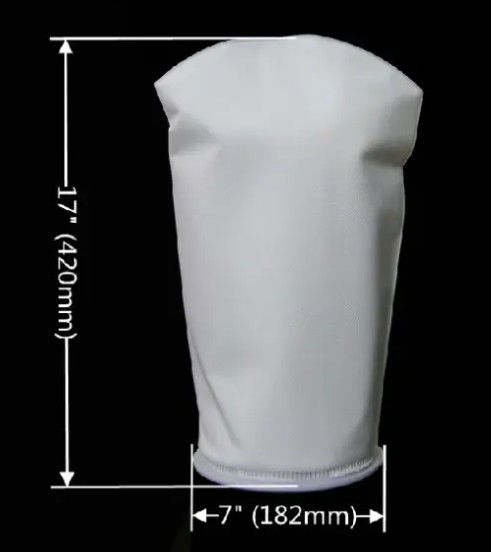
Application Needs in the Food and Beverage Industry
Food and Beverage Types
Food and beverage manufacturers process a wide range of products, each with unique filtration requirements. Breweries, wineries, dairy processors, juice producers, and bottled water facilities all require specialized filter bag solutions. Syrups, flavorings, and concentrates also demand precise filtration to maintain product quality. The selection of filter bag material depends on the application. The table below highlights common materials and their advantages:
| Material | Applications in Food & Beverage | Advantages |
|---|---|---|
| Polypropylene | Mild chemical resistance, stringent hygiene standards | Exceptional chemical resistance, lightweight |
| Nomex | Durable filtration without chemical contamination | Exceptional thermal stability, superior chemical resistance |
Filtration Goals
Filtration goals vary by application. Dairy processors focus on removing microbial contaminants and airborne impurities to extend shelf life and ensure product safety. Beverage producers aim to clarify liquids, remove yeast, and meet regulatory standards. Processed food manufacturers prioritize freshness, flavor, and safety by eliminating solids and microbes. Filtration supports these goals by:
- Maintaining food freshness
- Extending shelf life
- Improving overall product quality
Operators often use oil absorbing bags to address specific contaminants in beverage and food processing.
Operating Conditions
Operating conditions such as temperature, humidity, and air pressure directly affect filter bag performance. High temperatures or humidity can impact filter media permeability and lead to clogging. Facilities must select filter bags that withstand cleaning cycles and resist corrosion. Production continuity remains essential, so systems must be easy to maintain and quick to service. Oil absorbing bags offer a practical solution for removing unwanted residues in challenging environments.
Key Criteria for Custom Filter Bag Selection
Material Compatibility
Selecting the right filter bag material stands as the foundation for effective bag filtration in food and beverage processing. Manufacturers rely on several materials, each offering unique properties for specific applications. The most widely used filter bag materials include:
- Polypropylene filter bags
- Polyester filter bags
- Nylon filter bags
- Nomex filter bags
- Advanced polymers such as PTFE and PVDF
Polypropylene filter bags provide superior resistance to organic acids, alkalis, and solvents. They perform well in moderate temperature environments and offer excellent chemical compatibility. Polyester filter bags deliver high strength and exceptional resistance to mineral acids, making them suitable for continuous chemical exposure and high-temperature processes. Nylon filter bags excel in strength and abrasion resistance, maintaining integrity under stress. Nomex filter bags offer outstanding flame resistance, thermal stability, and chemical resistance, making them ideal for demanding food and beverage applications. Advanced polymers like PTFE extend chemical compatibility and resistance to aggressive cleaning agents.
| Material | Key Properties | Suitable Applications |
|---|---|---|
| Polyester | High strength, exceptional resistance to mineral acids, suitable for high temperatures | Chemical processing, continuous chemical exposure |
| Polypropylene | Superior resistance to organic acids, alkalis, and solvents, moderate temperature use | Corrosive substances filtration |
| Nylon | Exceptional strength, abrasion resistance, maintains integrity under stress | Dust collection in industries requiring durability |
| Nomex | Exceptional flame resistance, thermal stability, superior chemical resistance | Food & beverage processing, pharmaceutical manufacturing |
Choosing the correct filter bag material ensures optimal resistance, chemical compatibility, and durability in every bag filtration process.
Micron Ratings and Filtration Efficiency
Micron ratings determine the size of particles a filter bag can capture. Filtration efficiency directly relates to the micron rating selected for each application. Food and beverage processors must match micron ratings to their filtration goals, balancing flow rate, pressure drop, and contaminant removal.
| Micron Rating (μm) | Filtration Type | Flow Rate | Pressure Drop | Typical Usage |
|---|---|---|---|---|
| 25–10 | Fine | Medium | Moderate-High | Beverage, oil, chemical |
| 5–1 | Very Fine | Low | High | Sterile, pharmaceutical |
| 0.5–0.1 | Ultra-Fine | Very Low | Very High | Semiconductor, lab-grade |
Polypropylene filter bags and polyester filter bags are available in a wide range of micron ratings, from 0.2 to 300, supporting both coarse and ultra-fine bag filtration. High efficiency filter bags with welded seams prevent bypass and ensure consistent retention, which is critical for food safety and product quality.
Bag Size and Design
Bag size and design impact the efficiency and practicality of bag filtration systems. High-volume beverage production often requires larger filter bags with advanced sealing mechanisms. The table below outlines common sizes and design features:
| Filter Bag Size | Common Materials | Seal Type | Efficiency |
|---|---|---|---|
| #1 | Polypropylene, Polyester Felt | Round Ring, Crush Seal | Varies by design |
| #2 | Polypropylene, Polyester Felt | Round Ring, Crush Seal | Higher efficiency with crush seal |
| 1, 5, 10, 25 microns | Nylon, PTFE, Nomex | Standard Ring, Deformable Seal | Better for nominal retentions <25 microns |
Precision Filtration offers custom sizing and advanced designs, including welded seams and top sealing options. Welded construction enhances resistance and durability, while silicone-free finishes prevent surface defects in sensitive food and beverage applications.
| Feature | Description |
|---|---|
| Construction Type | 100% welded construction for better filtration performance. |
| Bypass Prevention | Prevents unfiltered liquids from bypassing through holes created by sewing. |
| Strength | Super-strong seam that withstands demanding applications. |
| Surface Finish | Silicone oil-free finish prevents craters for better surface results. |
| Fiber Migration | Special surface finish reduces fiber migration significantly. |
Regulatory Compliance
Regulatory compliance remains essential in food and beverage bag filtration. Filter bags must meet FDA standards for materials and construction. Polypropylene filter bags and nylon filter bags often serve as FDA-compliant options for sanitary applications. Manufacturers should verify that filter bag material, micron rating, and sealing mechanisms align with industry-specific standards.
| Selection Parameter | Description |
|---|---|
| Micron Rating | Match particle size requirements (typically 1-800 microns) |
| Flow Rate Capacity | Ensure adequate surface area for required flow rates |
| Dirt Holding Capacity | Consider contaminant loading for service life estimation |
| Pressure Drop Characteristics | Account for system pressure limitations |
| Sealing Mechanism | Ensure leak-free operation in your specific housing |
| Regulatory Compliance | Meet industry-specific standards (FDA, USP, etc.) |
| Recommended Materials | Nylon or Polypropylene, FDA-compliant options for sanitary applications |
Precision Filtration’s PO Filter Bags comply with FDA regulations and utilize welded seams for leak-free operation, supporting both safety and efficiency.
Temperature and Chemical Resistance
Temperature and chemical resistance define the suitability of a filter bag material for specific food and beverage processes. Polypropylene filter bags and PTFE options provide excellent chemical resistance, making them suitable for corrosive substances. High-temperature resistance ensures that polyester filter bags and Nomex filter bags maintain filtration efficiency and product safety during hot processes. Chemical compatibility charts help match filter bag material to process fluids and cleaning agents. Environmental factors, such as UV exposure and high temperatures, can affect resistance and durability.
- Polypropylene filter bags and PTFE options offer outstanding chemical resistance for aggressive cleaning and corrosive fluids.
- High-temperature resistance is critical for processes involving pasteurization or sterilization.
- Durability and resistance to environmental factors ensure long service life and consistent bag filtration performance.
Tip: Always consult chemical compatibility charts and process specifications before selecting a filter bag material for new or changing applications.
Polyester filter bags, polypropylene filter bags, nylon filter bags, and Nomex filter bags each provide unique combinations of resistance, chemical compatibility, and durability. Matching these properties to the application ensures reliable and efficient bag filtration in every food and beverage process.
Customization Options for Filter Bags
Custom Sizing
Precision Filtration offers custom sizing for both felt filter bags and mesh filter bags. Manufacturers can select the exact diameter, length, and mouth shape to fit unique housings or process requirements. Mesh filter bags come in a wide range of mesh openings, from 25 to 2000 microns, making them suitable for fine or coarse filtration. Felt filter bags provide depth filtration and high solids-loading capacity, which is essential for demanding food and beverage processes. Custom sizing ensures that applications of polyester filter bags and applications of polypropylene filter bags meet the specific needs of each production line.
Specialized Coatings and Treatments
Specialized coatings and treatments enhance filter bag performance. Precision Filtration applies options such as water repellent treatment, ePTFE membranes for superior filtration, and singeing to reduce fiber shedding. The table below highlights common customization features:
| Customization Option | Description |
|---|---|
| Water Repellent Treatment | Improves moisture resistance |
| ePTFE Membrane | Increases filtration efficiency |
| Singeing | Minimizes fiber release |
| Scrim | Adds strength |
| Wear Strips | Boosts durability in high-wear areas |
| Glazed | Eases cleaning with a smooth surface |
Mesh filter bags and felt filter bags can also include woven or non-woven cuffs for a secure fit and NFPA wire for safety compliance.
Branding and Labeling
Custom branding and labeling help companies stand out in the food and beverage market. Custom packaging creates a memorable visual identity and builds brand awareness. Attractive labels and packaging foster consumer trust and reinforce product quality. Companies can choose grease-resistant or moisture-proof liners to maintain food freshness and align with eco-friendly values. The table below summarizes key benefits:
| Benefit | Description |
|---|---|
| Brand Recognition | Unique labels make brands easy to recognize and remember |
| Consumer Trust | Professional packaging increases confidence in product quality |
| Marketing | Custom designs support marketing and customer engagement |
Custom branding on felt filter bags and mesh filter bags ensures a cohesive and professional appearance for every application.
Supplier Evaluation and Quality Assurance
Supplier Expertise
Selecting a supplier with proven expertise ensures consistent product quality and process reliability. Companies should evaluate technical capabilities, industry certifications, and the supplier’s track record in similar applications. The following table outlines key criteria for assessing supplier expertise:
| Criteria | Description |
|---|---|
| Technical Capabilities | Suppliers should demonstrate experience and success in food and beverage filtration projects. |
| Certifications | Recognized certifications indicate systematic quality management and specialized knowledge. |
| Service Support | Reliable post-installation support and maintenance programs help maintain operational success. |
| Filtration Accuracy | Suppliers must meet specific filtration requirements for particle size and process needs. |
| Material Compatibility | The ability to provide materials that match unique filtration needs is essential. |
| Customization Options | Suppliers should offer tailored solutions for unique operational requirements. |
Tip: Choose suppliers with FDA-compliant products and a strong history in the food and beverage sector for optimal results.
Certifications and Standards
Certifications and standards play a vital role in supplier selection. Leading suppliers maintain compliance with global and industry-specific standards. Important certifications include:
- FSSC 22000 Certification: Ensures food safety from production to purchase.
- SQF Certification: Guarantees products meet strict food safety guidelines.
- FDA Compliance: Confirms adherence to FDA regulations for food contact materials.
- Non-Allergen Statements: Protects consumers with allergies.
- RoHS Statements: Verifies products are free from hazardous substances.
These certifications demonstrate a supplier’s commitment to safety, quality, and regulatory compliance.
Sample Testing and Validation
Sample testing and validation confirm that filter bags perform as required in real-world conditions. Suppliers should offer comprehensive testing protocols, including:
| Testing Method | Description |
|---|---|
| Extractables Analysis | Identifies materials that may leach from filter bags. |
| Compatibility Assessment | Evaluates filter bag performance with specific food and beverage products. |
| Soiling Test | Simulates real-world usage to assess durability and efficiency. |
| Bacterial Challenge | Tests the ability to prevent bacterial contamination. |
| Product Wet Integrity Testing | Ensures filter bags maintain integrity when wet. |
| Protocol Submission | Suppliers submit detailed protocols for approval before testing. |
| Comprehensive Reporting | Suppliers provide complete reports with all experimental data. |
Precision Filtration’s PO Filter Bags undergo rigorous validation, ensuring reliability and safety for food and beverage applications.
Maintenance and Replacement for High Efficiency Filter Bags
Cleaning Protocols
Proper maintenance of high efficiency filter bags ensures consistent filtration and product safety in food and beverage processing. Operators follow several cleaning protocols to maximize performance and extend filter lifespan. The table below outlines common cleaning methods:
| Cleaning Type | Description |
|---|---|
| Routine Cleaning | Scheduled cleaning based on manufacturer recommendations or operational parameters. |
| Preventative Cleaning | Removes accumulated dust before it impacts airflow and filtration efficiency. |
| Non-Routine Cleaning | Addresses unexpected issues such as spills or equipment malfunction. |
| Pulse-Jet Cleaning | Uses bursts of compressed air to dislodge dust from the filter bags. |
| Shaker Cleaning | Physically shakes the bags to remove accumulated dust. |
| Manual Cleaning | Operators clean hard-to-reach areas directly, requiring system shutdown. |
| Online Cleaning | Cleaning without dismantling the filter bags, ensuring efficient dust removal. |
| Offline Cleaning | Involves washing filter bags in water with detergent, repairing minor damages. |
Operators use water for offline cleaning, ensuring thorough removal of contaminants. Water also plays a role in manual cleaning, routine rinsing, and maintaining filter bag integrity. Regular cleaning with water helps prevent major malfunctions and reduces energy consumption.
Handles on filter bags allow for easy installation and removal, minimizing downtime during cleaning and replacement.
Lifespan and Replacement Frequency
Maintaining optimal filtration efficiency requires timely replacement of filter bags. Operators monitor pressure drop and inspect filter bags for signs of wear. Visual indicators on filter bags provide cues for replacement. Several factors influence replacement frequency:
- The type of contaminants filtered
- The quality of filter bags used
- The operating conditions of the filtration system
Operators often rinse filter bags with water during inspections. Water helps identify leaks, fiber migration, or damage. Bag filter housings support quick changes, reducing operational disruptions. Regular replacement ensures high efficiency filter bags continue to deliver safe and reliable filtration for food and beverage applications.
Selecting a custom filter bag involves several steps:
- Choose clean, food-grade production.
- Use long fiber fabric for better filtration.
- Confirm sterilization and bacteria control.
- Assess filtration efficiency.
Aligning filter features with application needs and regulations improves safety. Trusted suppliers and product customization ensure optimal results in food and beverage processing.
FAQ
What factors determine the best filter bag material for food and beverage applications?
Manufacturers select filter bag materials based on chemical compatibility, temperature resistance, and regulatory requirements. Each process may require a different material for optimal performance.
How often should filter bags be replaced in food and beverage processing?
Operators monitor pressure drop and inspect filter bags regularly. Replacement frequency depends on contaminant load, process conditions, and the type of filter bag used.
Can custom filter bags be used in water treatment facilities?
Custom filter bags provide effective filtration in water treatment facilities. They help remove particulates and contaminants, supporting clean water production and regulatory compliance.
Post time: Dec-01-2025